
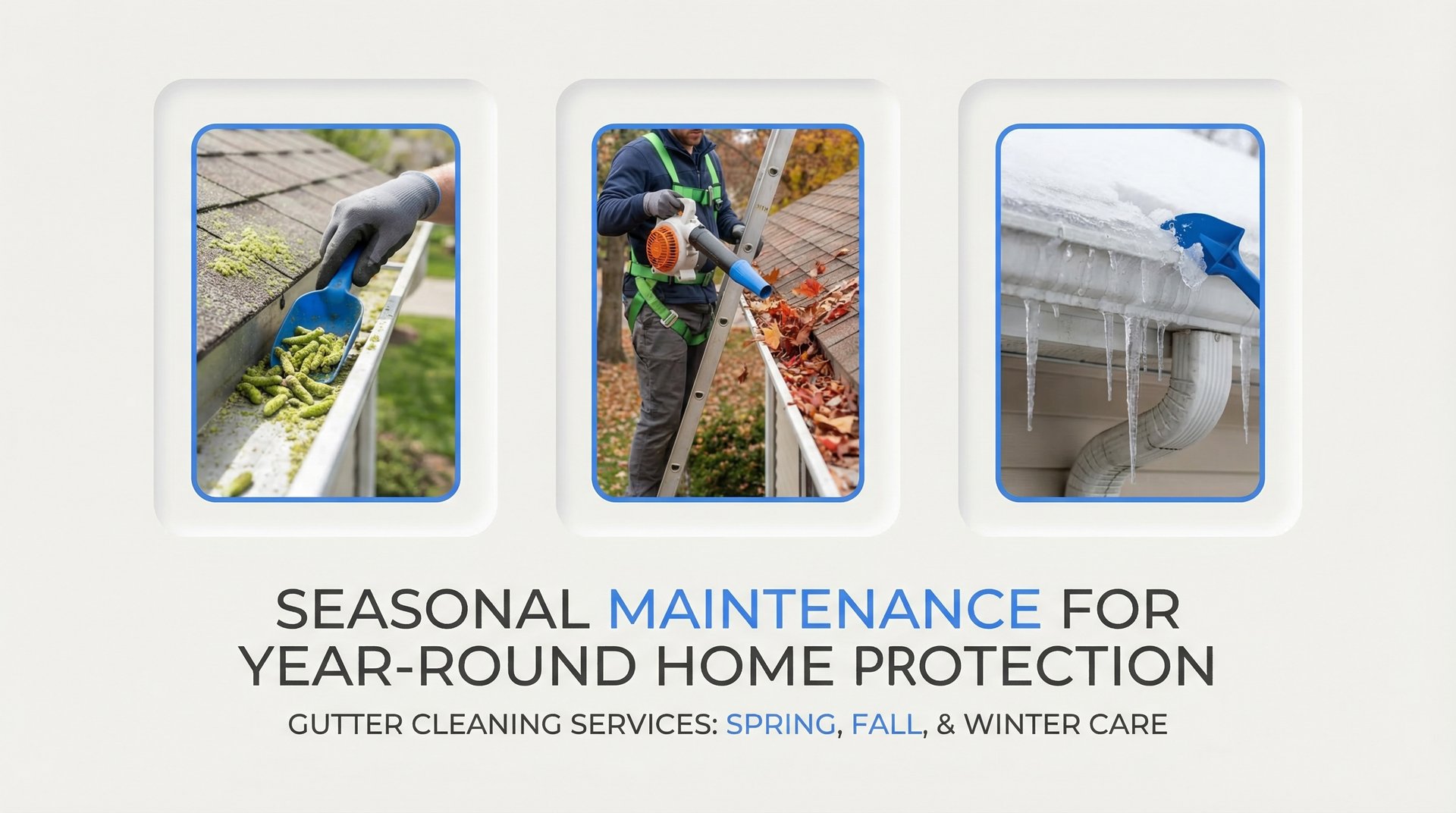
Your gutters are failing right now, and you probably don't even know it.
While you're reading this, water is quietly pooling against your foundation. Fascia boards are softening from moisture trapped behind clogged downspouts. Mosquitoes are breeding in standing water that's been sitting in your gutters since last October. And every rainstorm is making it worse.
The average homeowner doesn't think about gutters until water starts pouring over the sides during a storm, or worse, until they notice foundation cracks or basement moisture. By then, what could have been a simple cleaning has become a major repair project costing thousands of dollars.
Here's what most people miss: gutter maintenance isn't a once-and-done task. Your gutters face completely different challenges in spring versus fall. The debris that accumulates in October behaves nothing like the mess that builds up after winter ice melts in March. Professional seasonal gutter maintenance accounts for these differences, addressing specific threats before they escalate into expensive damage.
This guide breaks down what seasonal gutter care actually involves, why timing matters more than you think, and how to get it done without spending your weekend calling contractors who may or may not show up.
Your Gutters Face Different Threats Every Season
Spring gutter maintenance is damage control. After months of ice, snow, and freezing temperatures, your gutters need more than just cleaning; they need assessment. Ice dams that formed during winter can bend gutter brackets, create separation points where gutters pull away from fascia boards, and leave behind compacted debris that blocks proper drainage.
When ice melts and refreezes repeatedly, it expands inside your gutters, warping seams and cracking older materials. Professional spring maintenance identifies these structural issues early. A technician will check for loose mounting hardware, test downspout flow to ensure winter debris hasn't created blockages, and verify that water drains away from your foundation properly.
Spring also brings pollen, seed pods, and early plant growth. In many regions, trees release helicopter seeds and oak tassels that create a sludgy mess when combined with spring rain. This organic material doesn't just sit on top of your gutters; it compacts into a paste that blocks water flow and creates perfect conditions for rust and corrosion.
Fall maintenance is prevention. You're preparing your gutters to handle the wettest, coldest months of the year. In most climates, fall brings the heaviest leaf accumulation, and those leaves need to be cleared before the first freeze. Once leaves get wet and freeze, they form solid masses that are nearly impossible to remove without damaging your gutters.
The goal in fall is to create clear pathways for winter precipitation. When gutters are clogged during winter, melting snow has nowhere to go. It backs up under roof shingles, seeps into attic spaces, and refreezes at night, creating the ice dams that cause spring damage. Proper fall cleaning breaks this cycle.
Fall maintenance also addresses the debris you can't see. Shingle granules wash into gutters throughout the year, settling at the bottom and reducing capacity. Small twigs and pine needles work their way into downspout elbows, creating partial blockages that worsen over time. A thorough fall cleaning removes all of it, giving your drainage system maximum capacity heading into winter. For comprehensive gutter cleaning that addresses seasonal debris, professional service ensures nothing gets missed.
What Actually Happens During Professional Seasonal Maintenance
Professional gutter maintenance starts with complete debris removal, but that's just the beginning. A technician will scoop out leaves, branches, and accumulated sediment by hand or with specialized tools, working section by section around your entire roofline. This isn't a quick blow-out with a leaf blower; it's methodical removal that gets to the bottom of the gutter channel.
Downspout flushing comes next. Technicians use high-pressure water to clear blockages in downspouts and verify that water flows freely from the roof to ground level. This step reveals hidden problems: a downspout that drains slowly might have a clog at an elbow joint, or tree roots might be interfering with underground drainage extensions. Similar to how clogged drain repair requires identifying the source of blockages, gutter professionals trace drainage issues to their root cause. Identifying these issues during routine maintenance prevents emergency calls during the next heavy rain.
Gutter realignment is often included in seasonal maintenance. Over time, gutters can sag or pull away from fascia boards due to weight from debris, ice, or simple wear. Technicians check the pitch and slope of your gutters to ensure water flows toward downspouts rather than pooling in low spots. They'll tighten loose brackets, adjust hangers, and make sure your entire system maintains proper drainage angles.
The inspection component separates professional maintenance from DIY cleaning. A trained technician looks for rust spots, hairline cracks in seams, and signs of fascia board deterioration. They check end caps for leaks, test gutter-to-downspout connections, and identify areas where water might be escaping the system. These observations help you prioritize repairs before small issues become structural problems.
Minor repairs are typically included in standard maintenance visits. Resealing a small leak, replacing a loose bracket, or adjusting a misaligned downspout extension are quick fixes that prevent future damage. When you need additional work beyond gutter maintenance, handyman services can handle fascia repairs and other related tasks. However, major repairs, such as replacing entire gutter sections, fixing rotted fascia boards, or installing gutter guards, require separate service calls and additional costs.
What you're paying for is expertise and risk management. A professional knows the difference between normal wear and signs of impending failure. They understand regional weather patterns and can spot vulnerabilities specific to your climate. And they're insured for the ladder work and roof access that makes gutter maintenance dangerous for homeowners.
The Expensive Consequences of Neglected Gutters
Foundation damage is the most expensive result of gutter failure, and it happens gradually enough that most homeowners don't connect the dots. When gutters overflow or downspouts dump water directly next to your home, that water saturates the soil around your foundation. Over time, this creates hydrostatic pressure that forces water through foundation walls, causing cracks and basement leaks.
In cold climates, water near foundations freezes and expands, creating freeze-thaw cycles that widen existing cracks. In clay-heavy soil, excessive moisture causes soil expansion that pushes against foundation walls. Either way, foundation repair costs can escalate quickly depending on severity, often reaching several thousand dollars or more.
Roof and fascia rot starts where water backs up into roof edges. When gutters are clogged, water has nowhere to go except backward, under shingles and into the wooden structures beneath your roof. Fascia boards, which hold your gutters in place, are particularly vulnerable. They're in constant contact with moisture when gutters overflow, and wood rot spreads quickly once it starts.
Replacing rotted fascia boards requires removing gutters, replacing damaged wood, and reinstalling the gutter system. This isn't a DIY project. It involves working at height, matching existing trim, and ensuring proper attachment points for gutters. The cost typically represents a significant home repair expense depending on how much fascia needs replacement.
Pest infestations thrive in clogged gutters. Standing water attracts mosquitoes, which can breed in even small amounts of stagnant water. Birds and rodents see clogged gutters as perfect nesting sites, as they're protected from weather, elevated from predators, and filled with soft organic material for building nests. Once pests establish themselves in your gutters, they often find ways into your attic or wall cavities. If you suspect pest activity, a professional pest inspection can identify the extent of the problem.
The health implications are real. Mosquitoes carry West Nile virus and other diseases. Rodent droppings in gutters wash onto your roof and can contaminate rainwater collection systems. Birds nesting in gutters create noise, mess, and potential entry points for other pests. In cases where pest problems have become severe, professional disinfection services may be necessary to address contamination. Professional gutter maintenance eliminates these habitats before they become infested.
Getting Gutter Maintenance Done Without the Usual Headaches
Finding a reliable gutter cleaning service shouldn't require an entire afternoon of research, but that's exactly what most homeowners face. You start by searching online, finding a dozen companies with suspiciously similar websites and no clear pricing. You call three or four, leave voicemails, and wait for callbacks that may or may not come. When you finally reach someone, they want to schedule an in-person estimate. That means taking time off work, waiting around for a two-hour window, and listening to a sales pitch before you even know what the service will cost.
If you're lucky, you get a written quote. If you're not, you get a vague "depends on what we find" answer that leaves you guessing.
The coordination problem gets worse when you need service quickly. It's late October, leaves are falling, and you want gutters cleaned before the first freeze. But the contractor you called three weeks ago still hasn't sent a quote. The company with good reviews is booked until December. The one that answered immediately has a poor rating and reviews mentioning missed appointments.
This is where coordinated service booking changes everything. Instead of managing multiple contractor relationships, you work with a platform that handles vendor coordination for you. Delivered Near Me contacts local gutter professionals on your behalf, verifies availability, and presents options with transparent upfront pricing. You're not calling around hoping someone answers; you're selecting from vetted providers who are actually available when you need them.
The quality guarantee matters more than most homeowners realize. When you hire a random contractor from a search result, you're trusting their self-reported expertise. When you book through a platform that only works with 4.5+ star rated providers, you're accessing professionals with proven track records. These aren't companies that just started last month; they're established local businesses with consistent positive feedback.
Transparent pricing eliminates the estimate runaround. You see costs upfront, based on your home's specifics, before anyone shows up with a ladder. No surprise charges for "extra debris" or "difficult access." No pressure to add services you don't need. Just clear pricing for the work you're requesting, so you can make informed decisions without the typical contractor games.
Warning Signs That Your Gutters Need Immediate Attention
Water overflowing during rain is the most obvious sign that something's wrong. If you see water pouring over the sides of your gutters during even moderate rainfall, you have a blockage somewhere in the system. This could be a clogged downspout, a section of gutter filled with debris, or a sagging area where water pools instead of flowing toward drainage points.
Don't wait for your next scheduled maintenance if you notice overflow. Water that doesn't drain properly is actively damaging your home every time it rains. The longer you wait, the more water saturates vulnerable areas around your foundation, fascia, and roof edges.
Sagging gutter sections indicate structural problems. Gutters should maintain a consistent slope toward downspouts. If you see sections that dip noticeably or pull away from the roofline, the mounting hardware has failed or the gutter itself is damaged. This often happens when debris accumulates and adds weight, or when ice forms and expands during winter.
Sagging gutters don't improve on their own. The problem worsens with each rain and snow event, and eventually the entire section can detach from your home. If you notice sagging, request service before the next storm puts additional stress on weakened mounting points.
Visible plant growth in gutters means you have both organic debris and standing water, which are perfect conditions for seeds to germinate. Small plants, moss, or grass growing from your gutters indicate long-term neglect and complete drainage failure in those sections. The root systems from these plants can damage gutter seams and create additional blockages.
Staining on siding below gutters suggests chronic overflow. Water running down your exterior walls leaves mineral deposits, algae growth, or discoloration that's hard to miss. This staining is evidence that water has been escaping your gutter system repeatedly, and it indicates potential water damage behind the siding as well. In severe cases, you may need hauling services to remove damaged materials during repairs.
Pooling water near your foundation is a red flag for gutter system failure. Walk around your home after a rainstorm and look for areas where water collects against the foundation. This water should be directed away from your home by properly functioning downspouts and extensions. If it's pooling, your gutters aren't doing their job, and you need service before the next rain.
Protecting Your Home Is Simpler Than You Think
Seasonal gutter maintenance is one of the lowest-effort, highest-return investments in home protection. For a modest investment twice a year, you prevent potentially significant damage to your foundation, roof, and siding. You eliminate pest habitats. You extend the lifespan of your gutter system. And you avoid the emergency calls that happen when neglected gutters finally fail during the worst possible weather.
The barrier for most homeowners isn't cost; it's coordination. Finding reliable contractors, comparing options, and managing scheduling takes time that most people don't have. That's exactly the problem Delivered Near Me solves.
You don't need to research gutter companies, make multiple calls, or hope someone shows up on time. We handle vendor coordination so you don't have to. Our network includes only 4.5+ star rated local professionals who have proven track records in your area. You get transparent upfront pricing before anyone arrives at your home. No estimates, no surprises, no pressure tactics; just clear costs for the service you need.
Booking takes minutes, not hours. You specify what you need, we contact available providers, and you select the option that works for your schedule and budget. The professionals we work with show up on time, complete the work properly, and handle your home with the care it deserves.
Your gutters are either protecting your home or quietly failing. Seasonal maintenance ensures they keep doing their job year-round, regardless of what weather throws at them. Learn more about our services and get your gutters ready for the season ahead, without the usual contractor hassles.